


Bunions are one of the most recognisable changes in foot shape, but they are more than simply a bump on the side of the foot.
Known clinically as hallux valgus, a bunion involves a progressive change in the alignment of the big toe joint. The big toe moves towards the smaller toes while the first metatarsal shifts in the opposite direction, creating the characteristic prominence at the inside of the forefoot.
For some people, a bunion causes little trouble. For others, it can contribute to pain, irritation, difficulty finding comfortable footwear and changes in walking.
So, where does footwear fit into the picture? And can barefoot shoes help with bunions?
Research suggests that footwear is an important factor to consider. While barefoot shoes cannot be presented as a guaranteed way to reverse an established bunion, choosing footwear that gives the toes adequate space may reduce compression and create a better environment for natural foot function.
Looking for more room for your toes? Explore Bprimal's barefoot and natural footwear collection, designed around a wider, more natural foot shape.
What Is a Bunion?
A bunion develops around the first metatarsophalangeal joint (MTPJ) — the joint connecting the big toe to the foot.
Rather than being simply an extra growth of bone, hallux valgus involves changes in the position and alignment of the bones around this joint.
The Royal Australian College of General Practitioners' review of bunion management describes hallux valgus as a deformity in which the big toe deviates laterally while the first metatarsal deviates medially.
As the alignment changes, people may experience:
-
pain or tenderness around the big toe joint
-
redness or irritation where shoes rub
-
difficulty fitting into certain shoes
-
reduced movement of the big toe
-
changes in walking or balance
-
crowding or altered alignment of the other toes
Hallux valgus is also relatively common. The RACGP review reports an estimated prevalence of approximately 23% among adults, with prevalence increasing with age and being higher among women.
What Causes Bunions?
There isn't one universally accepted cause of every bunion.
Hallux valgus is generally considered multifactorial, with anatomy, biomechanics, age, sex, family history and footwear potentially contributing to its development and progression.
The role of footwear deserves particular attention.
Are Bunions Hereditary?
You may have heard someone say, "Bunions run in my family."
There can certainly be familial patterns. However, that does not necessarily mean that someone inherits a bunion itself.
Correct Toes challenges the idea that bunions should be considered purely hereditary. In its articles The Hereditary Bunion Myth: Part I and Part II, Correct Toes argues that inherited characteristics — such as foot width and soft-tissue flexibility — may interact with the footwear a person wears.
This is an important distinction.
Family members can share foot characteristics, but they may also share footwear habits and similar environments. Current evidence does not justify saying that every bunion is caused solely by shoes or, conversely, solely by genetics.
Instead, footwear is one potentially modifiable part of the picture.
How Conventional Shoes Can Affect a Bunion

Look at the shape of a natural foot and then at the shape of many conventional shoes.
They often don't match.
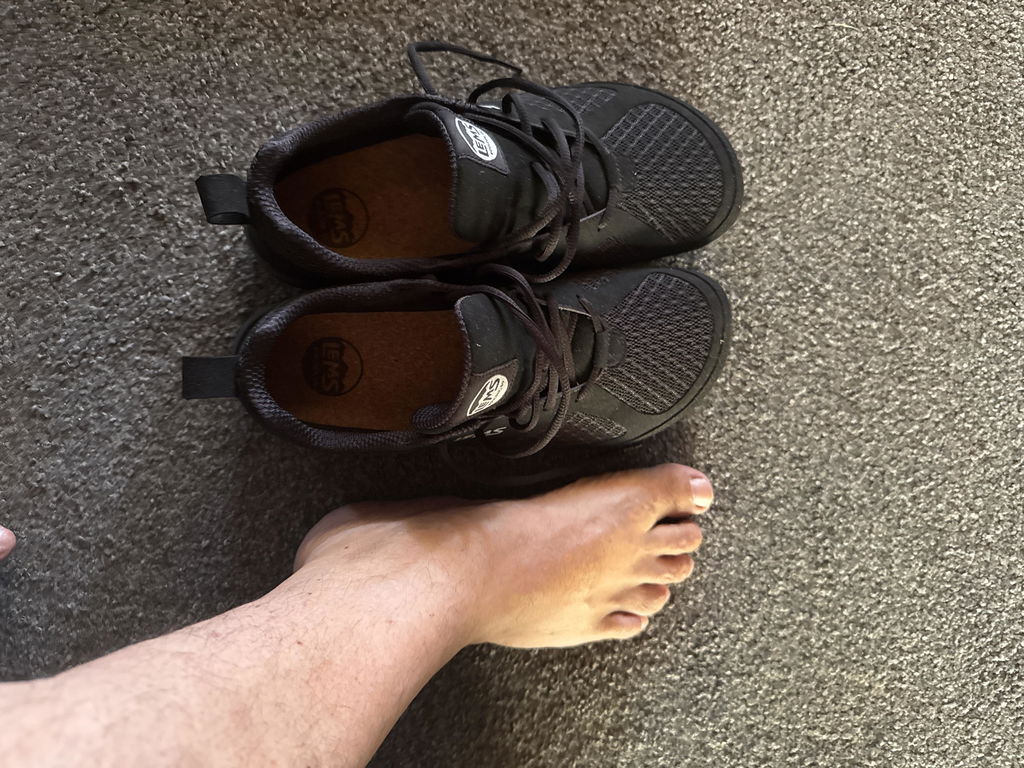
Many conventional shoes taper towards the front, bringing the toes together. A foot-shaped shoe does the opposite: it provides space around the forefoot so the toes are not unnecessarily compressed.
This distinction matters when a big toe is already drifting towards the other toes.
A narrow or tapered toe box can place additional pressure around the bunion and restrict the space available for the toes.
The RACGP therefore recommends accommodative footwear as part of initial non-operative management for symptomatic bunions.
A recent critical review of footwear and locomotor health also reported associations between elevated heels and hallux valgus, alongside other changes in foot loading and gait.
This gives us a practical principle:
Your shoes should accommodate the natural width and shape of your feet rather than forcing your feet to accommodate the shape of the shoe.
Can Barefoot Shoes Help Bunions?
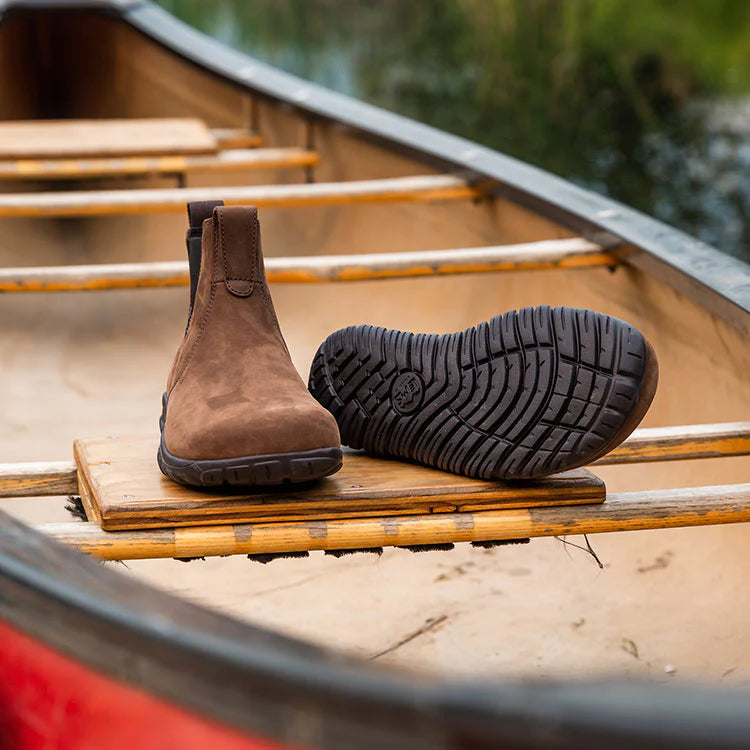
Barefoot shoes may be useful for some people with bunions because of their foot-shaped toe boxes, flexible construction and low- or zero-drop designs.
Their biggest potential advantage for a bunion is straightforward: space.
1. A Wide Toe Box Reduces Toe Compression
Barefoot and natural footwear is generally shaped to provide more room around the toes.
This allows the big toe to sit in a less compressed position instead of being continually pushed towards the second toe by a tapered shoe.
That does not mean a wide toe box will automatically straighten an established bunion. It means the footwear stops adding unnecessary external compression.
For someone with hallux valgus, that distinction is important.
Explore Bprimal's range of natural toe box and barefoot shoes.
2. The Toes Have More Space to Spread

Toe splay contributes to the foot's interaction with the ground during standing and movement.
A sufficiently wide shoe gives the toes room to move rather than holding them tightly together.
Barefoot shoes are specifically designed around this principle, with the forefoot shaped more closely around natural foot anatomy.
3. Flexible Shoes Allow More Natural Foot Movement
Conventional footwear can be relatively stiff, whereas barefoot footwear typically allows more movement through the foot.
A 2025 critical review of footwear choice and locomotor health examined how footwear features including heel elevation, cushioning and stiffness can influence foot structure, function and locomotion. The authors argue for minimal footwear or barefoot walking as a useful reference point for healthy, non-clinical populations while also stressing the importance of gradual adaptation. Read the review here.
Importantly, this broader research should not be interpreted as proof that minimalist footwear can reverse hallux valgus. The evidence is stronger for the idea that footwear changes how the foot functions than for claims that barefoot shoes can correct an established bunion.
4. Zero-Drop Footwear Removes Heel Elevation
Barefoot shoes generally use a zero-drop platform, meaning the heel and forefoot sit at approximately the same level.
This differs from footwear with an elevated heel.
Higher heels shift the body's centre of gravity and alter gait mechanics, while research reviewed in the recent footwear paper associates high-heeled footwear with hallux valgus and increased plantar pressure.
However, someone accustomed to elevated or heavily cushioned shoes should not necessarily move directly into the thinnest zero-drop footwear.
Bprimal's guide to transitioning to barefoot shoes explains how to gradually introduce natural footwear and allow the feet, calves and connective tissues time to adapt.
Can Barefoot Shoes Reverse a Bunion?

This is where it's important to separate reasonable conservative management from overpromising.
Correct Toes proposes that early bunion changes may be improved by restoring natural toe alignment, using foot-shaped footwear and strengthening the foot. Its article How to Shrink Bunions Naturally recommends natural foot-shaped shoes alongside exercises and toe spacers.
Clinical guidance is more cautious.
The RACGP recommends beginning symptomatic bunion treatment conservatively. Options can include accommodative footwear, orthotics, splints or braces and toe spacers, depending on the individual. However, conservative measures may not provide permanent correction or long-term relief in every case.
Therefore, barefoot shoes are better thought of as a way to create a more foot-friendly environment rather than a guaranteed bunion cure.
They can give the toes more room, reduce pressure from tapered footwear and allow more natural movement. The degree to which an individual's alignment or symptoms change will depend on the person and the severity of their condition.
Barefoot Shoes and Correct Toes: Creating Space for Alignment
Footwear is only one part of conservative foot care.
Toe spacers may also be useful for some people.
The RACGP review notes evidence supporting toe spacers among the non-operative approaches used for hallux valgus.
Correct Toes toe spacers are anatomically designed to separate the toes and encourage a more natural position. They can be worn progressively and, when there is sufficient room, inside appropriately shaped footwear.
This combination makes sense mechanically:
Toe spacers create space between the toes; foot-shaped shoes provide space around them.
Putting toe spacers inside a narrow shoe defeats much of the purpose because the shoe can simply push the toes back together.
For people considering this approach, Bprimal also offers a Correct Toes collection and bunion-focused options including the Bunion Relief Bundle.
Don't Forget Foot Strength
Creating space for the toes is only part of supporting better foot function.
Muscles also need to control that space.
Simple foot and toe exercises may help improve strength, mobility and awareness. Depending on individual ability, these might include:
-
controlled toe spreading
-
gentle big-toe mobility exercises
-
short-foot exercises
-
balance exercises
-
gradual barefoot walking in safe environments
Think of the process as space + movement + strength.
Foot-shaped footwear provides room. Toe spacers may assist positioning. Movement and exercise encourage the foot to actively use that available space.
Choosing Barefoot Shoes When You Have a Bunion

Not every "wide" shoe is necessarily suitable for a bunion.
Width through the middle of the shoe is different from having sufficient room at the toes.
When trying footwear, consider:
Toe-box shape
Look for a shoe that remains broad towards the ends of the toes rather than tapering sharply inwards.
Bunion pressure
The upper should not press or rub painfully against the prominence.
Overall width
Make sure your foot is actually contained within the shoe rather than spilling over the edge of the sole.
Flexibility
The shoe should permit comfortable movement without forcing the foot into a rigid position.
Your current level of adaptation
If you've worn highly cushioned, supportive or heel-elevated footwear for decades, an ultra-thin barefoot shoe may be too large a change initially.
A transition shoe can provide a more gradual introduction while retaining important natural-footwear characteristics such as a foot-shaped toe box.
Transition Slowly — Especially If Your Feet Are Already Painful
More minimal isn't automatically better if your body isn't ready for it.
A rapid change from conventional shoes to minimal footwear can significantly change the demands placed on muscles, tendons and joints. The footwear research reviewed above specifically cautions that transition to minimally shod or barefoot locomotion should be gradual.
Start with shorter periods and gradually increase wear as comfort and capacity improve.
Bprimal's barefoot transition guide provides a step-by-step approach for making this change more gradually.
When Should You Seek Professional Advice?
Barefoot shoes are not a replacement for medical assessment.
Seek advice from a GP, podiatrist, physiotherapist or appropriately qualified health professional if your bunion is causing persistent or significant pain, rapidly changing, interfering with normal activity, or making it difficult to find footwear.
Australian research into the management of hallux valgus found that GPs commonly provide advice and refer patients to podiatrists and orthopaedic surgeons, highlighting that management should be individualised according to symptoms and severity. Read the PubMed study.
The RACGP recommends considering surgical referral when a painful bunion continues to cause problems despite appropriate non-operative treatment. Surgery should be based on symptoms and function rather than appearance alone.
Get Help Finding the Right Fit
If you have bunions, simply buying the widest shoe available isn't always the answer.
The shape of your foot, severity of the bunion, current footwear, foot strength, activity level and stage of transition can all influence what feels appropriate.
If you're unsure, visit the Bprimal team in store for fitting guidance. We can help assess how different natural footwear shapes fit your feet and discuss considerations such as toe-box space, stack height and whether a more cushioned transition shoe or more minimal option may suit where you are currently at.
You can also explore Bprimal's adult barefoot footwear collection online.
Give Your Toes the Space to Move
Bunions are complex, and there is no single footwear solution that will produce the same result for everyone.
But one principle is difficult to ignore: if your toes are already crowded, continually placing them in footwear that crowds them further is unlikely to help.
Foot-shaped barefoot shoes offer another approach. Instead of forcing the forefoot into a tapered shoe, they provide room for natural toe position and movement.
Combined with a gradual transition, appropriate exercises, toe spacers where suitable and professional advice when needed, changing your footwear can form part of a broader strategy for improving comfort and supporting healthier foot function.
Ready to give your toes more room? Explore Bprimal barefoot shoes, browse Correct Toes toe spacers, or visit Bprimal for personalised fitting guidance.