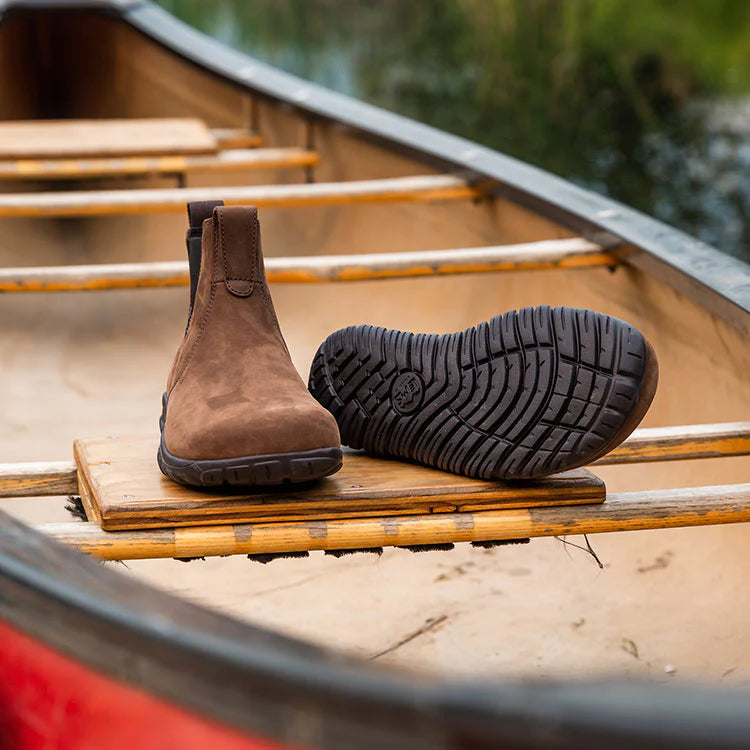



Children's feet are constantly growing and changing throughout childhood. During this time, the shoes they wear can influence how they move, while fit and design may affect comfort and healthy development.
Rather than looking for the most supportive or rigid shoe, current research increasingly suggests that well-fitting, lightweight and flexible footwear that allows natural movement may better accommodate growing feet.
If you're helping families choose children's footwear, understanding what the evidence actually shows can help separate long-standing myths from modern research.
Looking for foot-friendly kids' shoes? Explore Bprimal's range of flexible children's footwear designed to support natural movement.
Children's Feet Naturally Develop Over Time
Many parents worry when they notice their young child has flat feet. However, research consistently shows that this is often a normal stage of development.
A large cross-sectional study published in Pediatrics found that flat feet become less common as children grow older, with arch development occurring naturally throughout childhood. Body weight also appeared to influence foot posture.
Key takeaway
-
Many preschool children naturally have flatter feet.
-
Foot arches commonly develop with age.
-
Flat feet alone do not necessarily require intervention.
Do Children's Shoes Influence Foot Development?
Several population studies have explored whether footwear habits are associated with differences in children's foot shape.
Studies involving more than 2,000 children found that those who habitually wore closed shoes had a higher prevalence of flat feet compared with children who spent more time barefoot or wearing sandals.
Importantly, these were observational studies, meaning they found an association rather than proving that shoes cause flat feet. Other factors such as activity levels, environment and culture may also contribute.
Nevertheless, the findings suggest that footwear choices during childhood may influence developing feet.
Key takeaway
-
Footwear habits appear to be associated with developing foot shape.
-
Research does not prove that shoes cause flat feet.
-
Restrictive footwear may influence developing foot characteristics.
Shoes Change How Children Walk
A 2011 systematic review examined how children's walking differs when barefoot compared with wearing shoes.
Researchers found that shoes generally:
-
increased walking speed
-
increased step length
-
increased the amount of time the foot remained on the ground
-
reduced some natural foot motion.
A controlled laboratory study reached similar conclusions, showing that shoes altered lower limb mechanics and constrained movement within the foot.
This doesn't necessarily mean shoes are harmful—they provide protection and are often essential in everyday environments—but it does show that footwear is not biomechanically neutral.
What Can Barefoot Populations Teach Us?

More recent studies have compared children who grow up habitually barefoot with those who regularly wear shoes.
Researchers observed differences in:
-
foot strength
-
arch morphology
-
balance
-
motor performance
-
overall foot function.
Again, these studies identify associations rather than proving barefoot activity directly causes stronger feet. Lifestyle, physical activity and cultural differences may all influence the results.
Even so, the findings support the idea that allowing children's feet opportunities to move naturally may contribute to healthy foot development.
Key takeaway
Natural movement appears to play an important role in developing strong, functional feet.
Why Flexible Children's Shoes May Be a Better Choice
While children often need shoes for school, sport and outdoor play, research suggests that footwear should interfere with natural movement as little as possible.
Flexible children's shoes can allow the foot to bend and move more naturally compared with very stiff footwear.
For families interested in barefoot-style shoes, this philosophy aligns closely with current evidence. Barefoot shoes are generally designed to provide:
-
a wide toe box that allows toes to spread naturally
-
flexible soles that bend with the foot
-
lightweight construction
-
minimal heel elevation
-
secure fastening without excessive restriction.
These features aim to let children's feet move more naturally while still providing protection from everyday surfaces.
It's important to note that barefoot shoes are not a treatment for flat feet or other conditions. Rather, they represent one footwear option that prioritises natural foot function and movement.
What Research Says Makes a Good Children's Shoe
A comprehensive 2024 systematic scoping review examined the available evidence on children's footwear and identified several recurring design features associated with healthy footwear selection.
Researchers highlighted the importance of:
-
correct sizing
-
adequate toe room
-
flexible soles
-
lightweight construction
-
secure fastening
-
comfortable fit.
A 2025 international expert consensus (CHILD-SHOE Reporting Checklist) reinforced these recommendations, identifying shoe fit, flexibility, weight, heel-to-toe geometry and fastening systems as key characteristics that researchers should consistently evaluate.
Together, these studies suggest that the best children's shoes aren't necessarily the most supportive—they're the ones that fit properly and allow children to move naturally.
Practical Tips for Choosing Children's Footwear
When selecting shoes for growing feet, consider whether they:
-
fit correctly in both length and width
-
provide enough room for the toes to spread
-
bend easily through the forefoot
-
are lightweight rather than bulky
-
stay securely on the foot during activity
-
feel comfortable without needing a "break-in" period.
Since children's feet grow quickly, regular sizing checks are equally important to ensure their footwear continues to fit well.
The Bottom Line
Research continues to show that children's feet are designed to develop naturally throughout childhood. While shoes are often necessary for protection and everyday life, evidence suggests that footwear should accommodate growing feet rather than restrict them.
Current research supports prioritising fit, flexibility, toe space and lightweight construction, while recognising that natural movement plays an important role in healthy foot development.
For clinicians, parents and educators, choosing footwear that works with a child's developing feet—not against them—may help encourage comfortable, confident movement throughout childhood.
Ready to support healthy growing feet? Browse Bprimal's collection of flexible children's barefoot shoes designed with natural movement, comfort and growing feet in mind.