


Your feet do far more than simply provide a base to stand on. With every step, a complex system of small muscles works to stabilise the foot, manage changes in the arch and help the body move efficiently.
Among these are the intrinsic foot muscles — small muscles that originate and insert entirely within the foot.
Although they are easy to overlook, research suggests these muscles contribute to foot posture, arch control and the way the foot responds to load. Strengthening them may improve some aspects of foot function, although the benefits depend on the individual and the condition being treated.
Understanding these muscles can help us look at footwear, exercise and foot health differently — focusing not only on supporting the foot externally, but also on maintaining its capacity to work.
What Are the Intrinsic Foot Muscles?
The foot contains both intrinsic and extrinsic muscles.
Extrinsic muscles originate in the lower leg and cross the ankle to act on the foot. Intrinsic muscles, by contrast, are located entirely within the foot.
They include muscles such as the:
-
Abductor hallucis
-
Flexor digitorum brevis
-
Quadratus plantae
-
Abductor digiti minimi
-
Lumbricals
Together, these muscles contribute to controlling the toes and stabilising the foot during standing, walking and running. They also help control deformation of the longitudinal arch as the foot accepts and transfers load.
Rather than thinking of the arch as a rigid structure that simply needs to be “held up”, it is more useful to think of the foot as a dynamic structure capable of changing shape under load and becoming more rigid when needed for propulsion.

Why Does Intrinsic Foot Strength Matter?
When we walk or run, the foot repeatedly absorbs and transfers force.
The intrinsic muscles contribute to this process by helping control the arch and stabilise the foot. Experimental research cited by Saunders Physiotherapy has demonstrated that intrinsic foot muscles can actively control deformation of the longitudinal arch rather than the arch behaving as an entirely passive structure.
This has implications for everyday movement.
A foot capable of actively adapting to load may contribute to:
-
Arch control
-
Toe control
-
Stability during movement
-
Efficient push-off
-
Adaptation to different surfaces
This doesn't mean stronger feet automatically prevent pain or injury. Foot function is influenced by many factors, including mobility, training load, previous injury, footwear, body composition and individual anatomy.
However, foot strength is one component of physical capacity that can be trained.
What Does the Research Say About Foot Strengthening?
A 2024 systematic review and meta-analysis examined intrinsic foot muscle strengthening in people with lower-limb injuries.
After screening more than 1,000 studies, four met the criteria for inclusion. The analysis found that intrinsic foot muscle strengthening produced improvements in medial longitudinal arch height in the included populations.
The researchers concluded that increasing intrinsic foot muscle strength could produce positive biomechanical changes in the longitudinal arch.
This provides evidence that the foot is not simply a passive structure. Like other parts of the body, aspects of its muscular function can respond to exercise.
At the same time, only four studies were included in the meta-analysis, so the findings shouldn't be interpreted as evidence that foot strengthening can prevent or treat every foot or lower-limb condition.
Foot Strength and Plantar Heel Pain: An Important Distinction

Plantar heel pain is frequently discussed in relation to weak foot muscles, but current evidence suggests the relationship is more complicated.
A 2017 systematic review investigated strength training for plantar fasciitis and intrinsic foot muscle function. Seven studies met its inclusion criteria.
The researchers found some evidence that foot exercises, resisted toe flexion and minimalist running footwear may contribute to improvements in intrinsic foot muscle function. High-load resistance training also showed indications of improving pain and function in plantar fasciitis.
However, the authors emphasised limitations in the available evidence and could not determine precisely how much intrinsic muscle strengthening benefits people with, or at risk of, plantar fasciitis.
More recent research adds another important piece to the picture.
A 2026 MRI study compared four key intrinsic foot muscles in 50 people with plantar heel pain and 25 matched controls without plantar heel pain.
Researchers found no significant differences in the cross-sectional area of the abductor hallucis, quadratus plantae, flexor digitorum brevis or abductor digiti minimi between the two groups.
In other words, people experiencing plantar heel pain did not simply have smaller intrinsic foot muscles.
That means strengthening the intrinsic muscles shouldn't automatically be prescribed on the assumption that plantar heel pain is caused by weak or undersized foot muscles.
Foot strengthening may still form part of an individual rehabilitation program, but heel pain should be considered in the context of the whole person rather than reduced to a single muscular cause.
Can Barefoot and Minimalist Footwear Help Exercise the Feet?
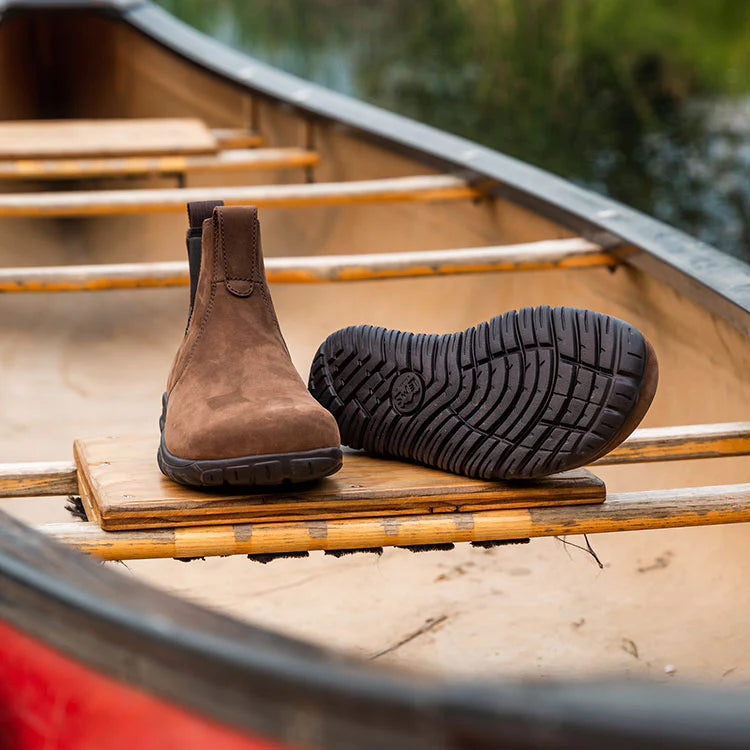
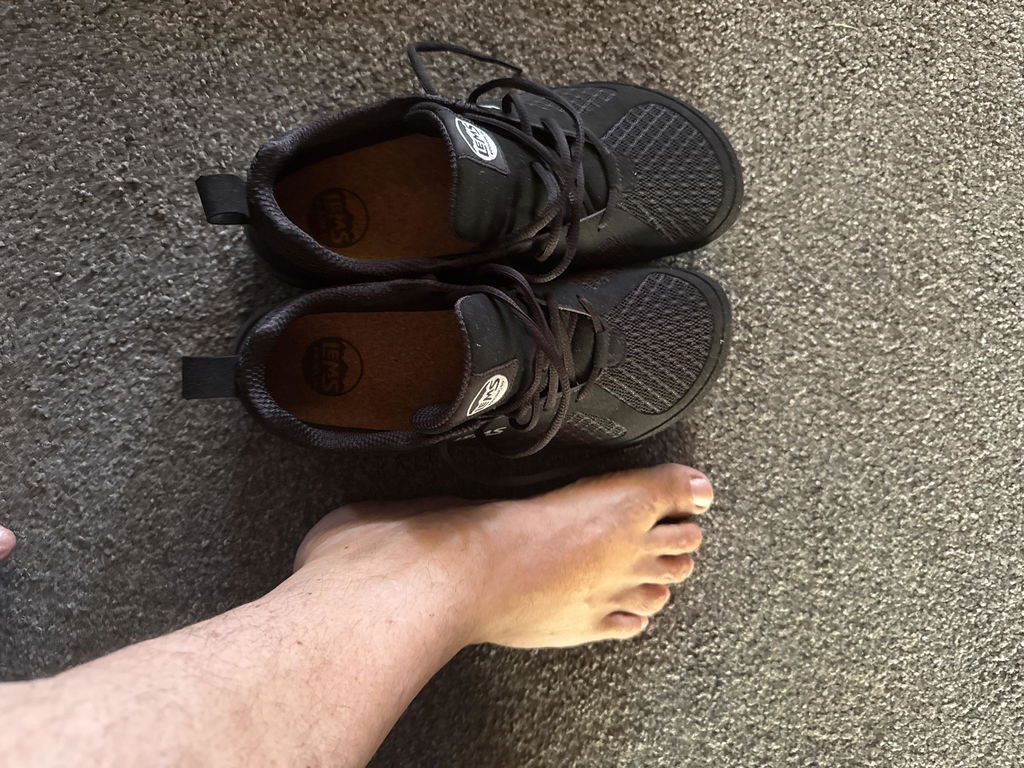
Barefoot and minimalist footwear is designed to interfere less with natural foot movement than highly structured footwear.
Typical features include:
-
A wide, foot-shaped toe box
-
A flexible sole
-
Minimal or zero heel-to-toe drop
-
Lower overall structure
-
Space for the toes to move and spread
These features may give the foot more opportunity to move and work during everyday activity.
Earlier research reviewed by Huffer and colleagues found limited evidence that minimalist running shoes, foot exercises and resisted toe flexion could contribute to improved intrinsic foot muscle function.
The important word here is opportunity.
A barefoot shoe doesn't automatically make someone's feet strong. Changing footwear alters the demands placed on the feet, and those tissues still need time to adapt.
This is why transitioning gradually is important, particularly for someone accustomed to stiff, supportive or highly cushioned footwear.
You can read Bprimal's guide to transitioning to barefoot shoes safely for more guidance on progressively adapting to minimalist footwear.

Simple Exercises for Intrinsic Foot Strength
Foot strength can also be trained directly.
The goal isn't necessarily to perform complicated exercises. Small, controlled movements can challenge muscles that may receive less attention during conventional strength training.
1. Short Foot or Arch Doming
Place the foot flat on the floor.
Without curling the toes, gently draw the ball of the foot towards the heel so that the arch rises slightly.
The movement should be subtle. Avoid gripping the floor aggressively with your toes.
2. Toe Spreading
Keep the foot relaxed and try to spread the toes apart while maintaining contact with the floor.
This develops awareness and independent control of the toes.
3. Toe Pressing
With the heel and forefoot on the floor, gently press the toes down without curling them underneath the foot.
4. Single-Leg Balance
Stand on one leg and allow the foot and toes to respond naturally to maintain balance.
As control improves, difficulty can be increased by changing the surface, adding movement or performing the exercise during other activities.
5. Progressive Calf Raises
Calf raises primarily challenge muscles of the lower leg, but they also require the foot and toes to create a stable base as the body moves through push-off.
Exercises such as arch doming, toe spreading and other targeted movements have been used to activate intrinsic foot muscles.
The appropriate exercise, resistance and volume will depend on your current capacity.
Don't Forget About Toe Space
Strength requires movement.
If footwear compresses the toes or prevents the forefoot from moving comfortably, it may limit the positions available to the foot during movement.
A wide toe box gives the toes room to spread rather than forcing them together. A flexible sole can also allow the foot to bend and adapt more freely.
That doesn't mean wider or more flexible footwear automatically strengthens the foot. Instead, it creates an environment where natural movement is less restricted.
This is one reason fit is particularly important when choosing minimalist footwear. Bprimal's guide to shoe fit, comfort and pressure explains how width, toe-box shape, internal volume and flexibility can influence the way a shoe interacts with your foot.
Build Capacity, Don't Rush It
Just as you wouldn't expect to dramatically increase your squat or running distance overnight, the feet need time to adapt to new loads.
Someone who has spent years in supportive, rigid or highly cushioned footwear may initially have a different capacity from someone who regularly walks barefoot or uses flexible shoes.
Rather than immediately removing all support or dramatically increasing barefoot activity, progression can be gradual.
You might begin with:
-
Short periods barefoot at home
-
Basic foot-strength exercises
-
Toe-control exercises
-
Balance work
-
Short periods in minimalist footwear
-
Gradually increasing walking or training volume
The appropriate progression will vary considerably between individuals.
Pain isn't a requirement for adaptation. Persistent or increasing pain is a reason to reduce the load and, where appropriate, seek assessment from a qualified health professional.
Foot Strength Is Only One Part of Foot Health
Perhaps the most important takeaway from the research is that foot strength matters, but it isn't the whole story.
The intrinsic muscles contribute to arch control, toe movement and dynamic foot function, and strengthening interventions can produce measurable biomechanical changes.
But stronger intrinsic muscles aren't a universal solution for foot pain.
The recent plantar heel pain research is a useful reminder: people experiencing heel pain did not necessarily have smaller intrinsic foot muscles than people without pain.
Foot health is influenced by the interaction between:
-
Strength
-
Mobility
-
Sensory feedback
-
Footwear
-
Training and walking volume
-
Tissue capacity
-
Previous injuries
-
Individual anatomy
Rather than asking how much external support we can add to the foot, another useful question is:
What does this person's foot currently have the capacity to do, and how can that capacity be developed appropriately?
Finding the Right Footwear for Your Current Capacity
Barefoot footwear can provide more space and flexibility for natural foot movement, but there isn't one ideal shoe for every person or every stage of transition.
Someone new to minimalist footwear may prefer more cushioning or a slightly higher stack height while building foot strength and mobility. Someone with well-adapted feet may be comfortable with a thinner and more flexible sole.
Fit, activity, current strength and previous footwear habits all matter.
If you're unsure where to begin, visit the Bprimal team at Neutral Bay, Sydney or Northcote, Melbourne for personalised fitting guidance. Our team can help you compare toe-box shape, flexibility, cushioning and stack height to find an option suited to your feet and intended activity.
You can also explore Bprimal's range of barefoot gym and training shoes designed to provide a wider toe box and flexible platform for natural movement.
Stronger Feet Start With Movement
The muscles inside the foot may be small, but their role in movement isn't.
Research increasingly supports viewing the foot as an active, adaptable structure rather than something that always needs to be externally supported.
Creating space for the foot to move, gradually challenging its muscles and choosing footwear appropriate for your current capacity can all form part of developing stronger, more functional feet.
The goal isn't simply to remove support.
It's to progressively build a foot that's capable of doing more for itself.